
Half the yards in this part of the Upstate have the same problem: the ground was never shaped, only scraped. Water sits in a low corner for three days after a storm. The back half of the lot is unusable in spring. There is a swale running along the property line that somebody upstream created and nobody downstream agreed to. Eastern Land Solutions handles land grading and leveling across Spartanburg, SC and the surrounding Upstate — residential yards, building lots, fields, and pastures reshaped so water leaves on purpose. Call (864) 999-3420 for a free on-site estimate.
Grading is reshaping the surface of a property so it drains and carries load, and it starts with elevations rather than with a machine. We find the high and low points, trace where water enters the property and where it can legally and physically leave, and set the finished contour that gets it from one to the other. Then the ground gets stripped — topsoil off and stockpiled, because organic material will not compact and cannot be built on, and because good topsoil is worth putting back rather than burying. From there it is cut and fill: material moves from high ground to low, spread in lifts and compacted as it goes. That last detail is what separates grading from dirt-pushing. Fill placed in one deep layer never reaches uniform density; it settles unevenly over the following year and takes whatever is on top of it along. Soft or saturated subgrade gets undercut and replaced. Finish grade is cut with intent: positive fall away from every structure, no closed low spots, and slopes gentle enough to mow and hold seed. Where sheet flow has to be redirected, we shape swales that carry it to a controlled outlet rather than onto a neighbor. Piedmont clay makes this both easier and harder. It compacts to an excellent bearing surface at the right moisture and turns to pudding at the wrong one, and Clemson research on Piedmont soils documents how persistently these soils hold compaction once equipment has worked them — which is exactly what you want under a pad and exactly what you do not want under a lawn you intend to grow grass on.
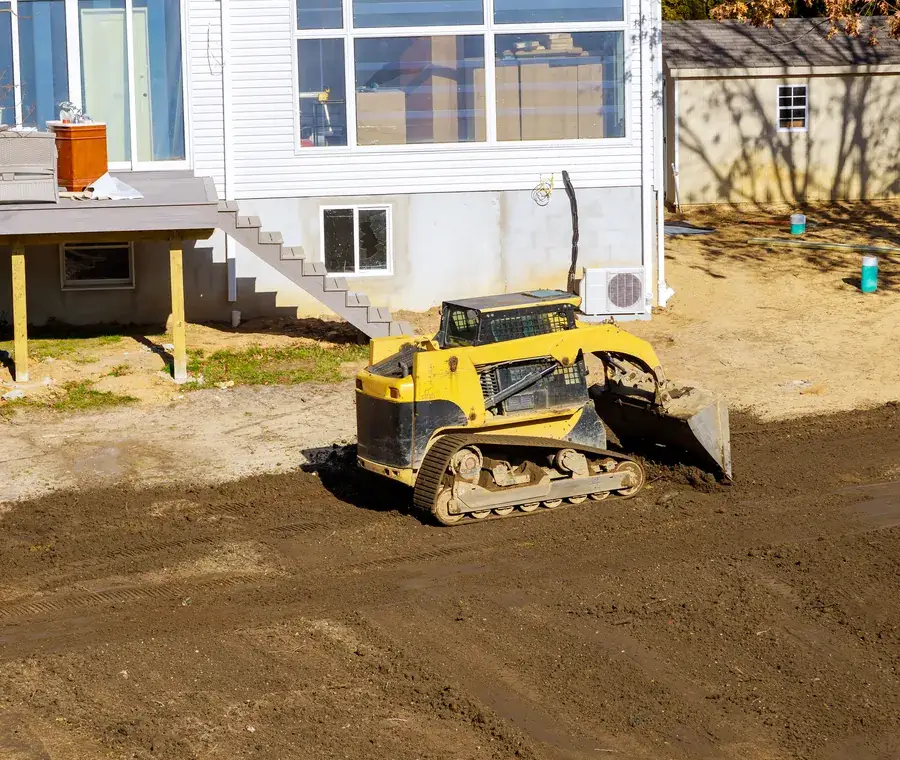
We walk the property, take elevations, and work out what water is actually doing — which is often not what the owner assumes. We look at the neighbors’ drainage, the road ditch, the natural low corner, and any existing pipe. Then we tell you what the site is capable of and where the constraints are before we quote it.
Anything in the way comes out, stumps included, since you cannot grade over a root plate and expect the surface to stay put. Topsoil is stripped and stockpiled where it is out of the work. Sediment control goes in before the ground is opened, not after the first storm proves it was needed.
For a compacted pad ready for construction, see our building pad preparation services.
Material moves from cut to fill in controlled lifts, each compacted before the next goes on. Moisture gets managed as we work, because clay placed too wet will never reach density. Where the underlying ground is soft, it gets undercut and replaced rather than built over.
We cut the final contour so every structure has fall away from it and there are no closed low spots left behind. Swales get shaped where sheet flow needs directing, and any outlet is placed where the water has somewhere legitimate to go. This is the part of the job you will still be grateful for in ten years.
Stockpiled topsoil goes back over the finished contour so grass will actually establish, disturbed areas get seeded or stabilized, and we walk the site with you and show you where water will go in a hard rain. You end up with ground that is level where it should be and sloped where it has to be.
We grade throughout Spartanburg County — Una, Arkwright, Saxon, Fairforest, Arcadia, Roebuck, and Moore along the US-29 and I-26 corridors, and out through Woodruff, Reidville, Duncan, and Greer. We also work Greenville County toward Easley, Gaffney and Cherokee County, and Laurens County to the south. Older neighborhoods on the Fairforest Creek and Lawson’s Fork drainages are where we see the most persistent water problems, because decades of small changes upstream — a new drive here, a filled low spot there — have quietly redirected runoff into yards that used to drain fine. None of this country is naturally flat, and the difference between a usable lot and a frustrating one is usually a cut-and-fill volume nobody measured.
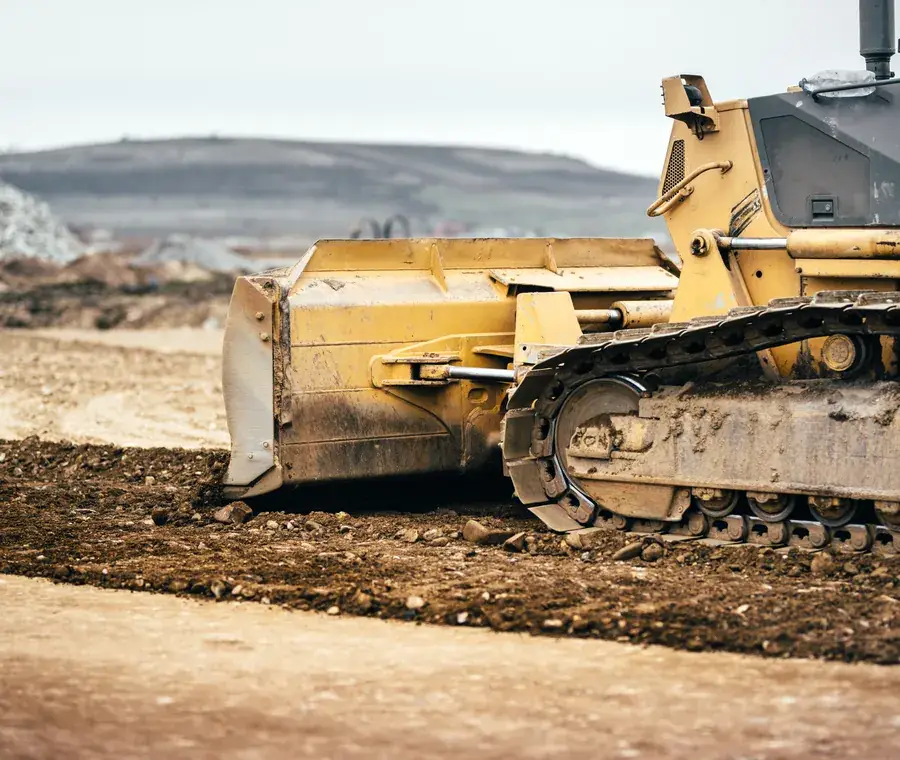
Four people, family-owned: Michael, his son Marshall, and two crew members who have been with the family for over twenty years and more than a decade. Small crews are an advantage on grading specifically, because the person who read the site is the person moving the dirt and nothing gets lost between the estimate and the machine. Grading rewards long experience more than almost any other dirt trade — knowing how much a clay fill will settle, reading where water will sit before it rains, and knowing when to stop and let a site dry instead of churning it into something unusable. Meet the crew that will be in your yard. Where a job disturbs an acre or more, SCDES stormwater coverage is required before work begins, and we tell you which side of that line you are on at the estimate. Free estimates, credit cards accepted, Monday through Friday, 7:00 a.m. to 5:30 p.m. Tell us where the water is going or call (864) 999-3420. See clearing, grading, and excavation across the Upstate for the bigger picture, or the grading and site preparation overview. If what is really failing is the driveway rather than the yard, that is driveway grading and drainage.
Usually, and it is the right fix far more often than a drainage product is. Most standing water in Upstate yards is a grade problem — not enough fall away from the structure, a closed low spot, or uphill runoff funneled somewhere it was never meant to go. The correction is reshaping the surface, sometimes with a swale or pipe to carry water to an outlet. We will tell you honestly if the problem is bigger than grading can solve.
It is priced by the volume of material moved, the access, and how much has to be imported or exported. Leveling an open yard is a different order of magnitude from a lot needing several feet of cut on one end and fill on the other. Any stone, fill dirt, or topsoil brought in adds material and haul cost on top of machine time.
It will if the topsoil goes back on. That is the whole reason we strip and stockpile it separately rather than mixing it into the fill. Grading that finishes on bare compacted subsoil is why so many regraded yards struggle to establish grass for years afterward.
We can shape a site to control where water leaves it, and that is often exactly the fix. What we will not do is redirect a problem onto somebody else’s property, which creates a dispute and sometimes a liability. Where a site genuinely has nowhere good to send water, the answer is usually a designed outlet or on-site retention rather than a regrade, and we will say so.