
Clearing, grubbing, forestry mulching and site prep across Fountain Inn and the south end of the Golden Strip — from I-385 and SC-14 out to the Laurens County line and the Enoree.
25 Years Operating Heavy Machinery
Family-Owned & Family-Operated
Free Estimates — Always
Fountain Inn is the southern anchor of the Golden Strip, about twenty miles below downtown Greenville with direct I-385 access and SC-14 running through it from Laurens up to Greer. It’s the smallest of the three Golden Strip cities at roughly eleven thousand residents, and locally it gets called the diamond tip of the strip. What sets it apart from Simpsonville and Mauldin for land work is simple: it still has real undeveloped acreage around it. The city limits are urban, but step outside them and you’re in open ground.
There is one technical fact about Fountain Inn that matters more here than anywhere else we work: the Greenville–Laurens county line runs through this city. Greenville County is an MS4 permittee whose stormwater quality requirements begin at ten thousand square feet — roughly a quarter acre, far below the statewide one-acre threshold — with a tree preservation ordinance that applies wherever a stormwater permit is required. Laurens County runs a different local process entirely. Which set of rules applies to your property depends on which side of that line it sits, and getting it wrong stops a job.
The city’s population has grown almost six percent this century, it has exceeded the goals of its master plan and is drafting a new one, a new high school has given it an identity separate from Simpsonville, and new development is driving demand for industrial parks and infrastructure. That means both kinds of work here — genuine clearing and grubbing on acreage outside the limits, and careful lot-scale work inside them. We do both, out of our shop in Roebuck.
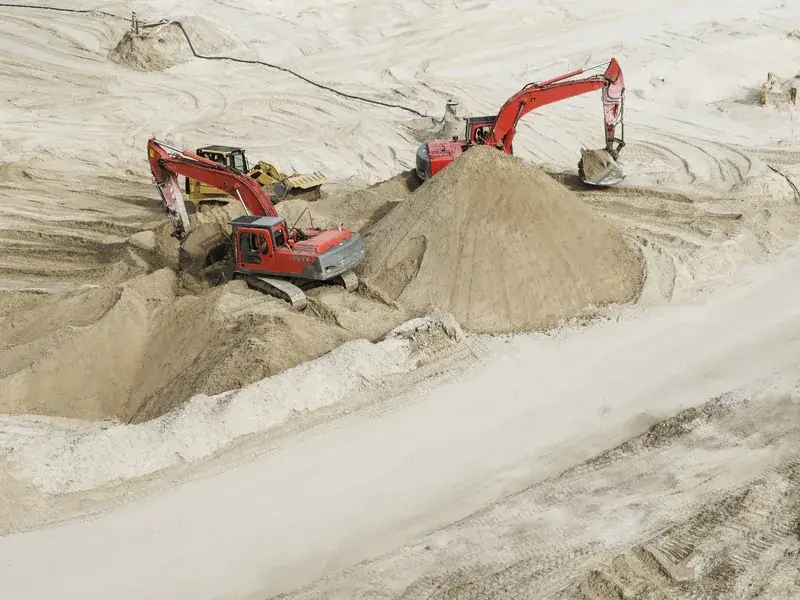
Everything Eastern Land Solutions offers is available across Fountain Inn and the south end of the Golden Strip. Acreage outside the city limits and established lots inside them — same crew, same equipment, free estimate either way.
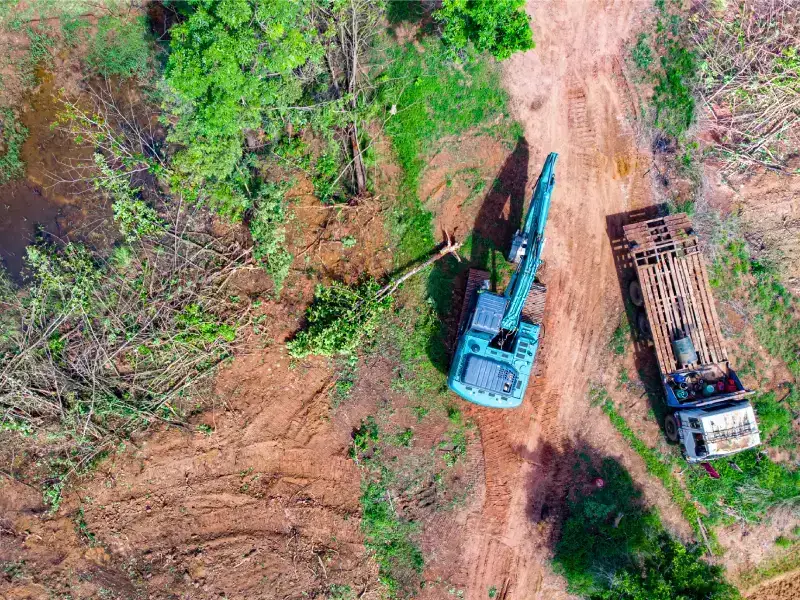
Fountain Inn is one of the few Golden Strip markets where real clearing work still exists. We clear homesites, acreage tracts and development parcels outside the city limits toward the Laurens County line and the Enoree, and handle infill and established-lot clearing inside them. Clearing and grubbing — getting the root mass out, not just the trunks — is what matters when a builder is coming behind you. Before we start, we establish which county your parcel sits in, because the rules differ.
Services include:
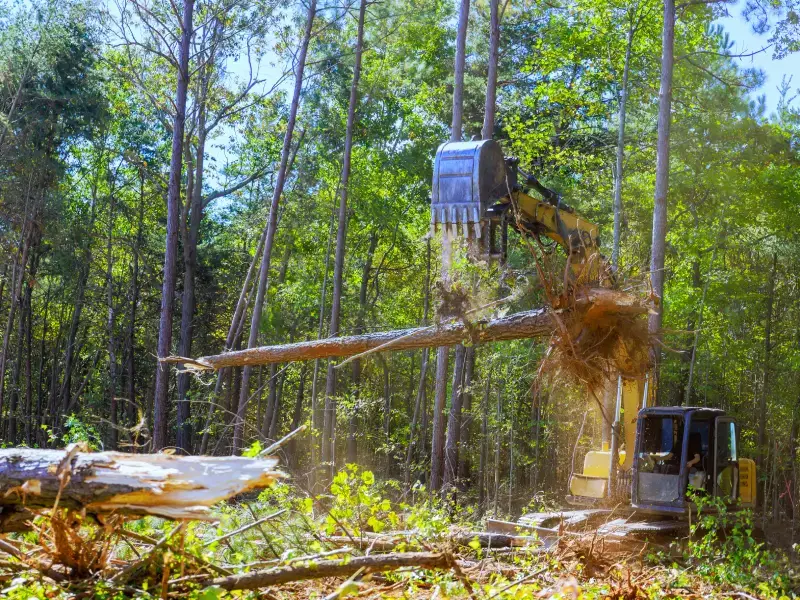
Mulching does two jobs well here. On acreage it opens up woods, fence lines, trails and property boundaries while leaving the mat to hold red clay in place. Inside the city limits it disturbs far less ground than full clearing, which matters a great deal on the Greenville County side where the stormwater quality threshold starts at ten thousand square feet. And with the county’s tree preservation ordinance running on tree density unit credits, selective mulching around trees you’re keeping is often what you actually want.
Services include:
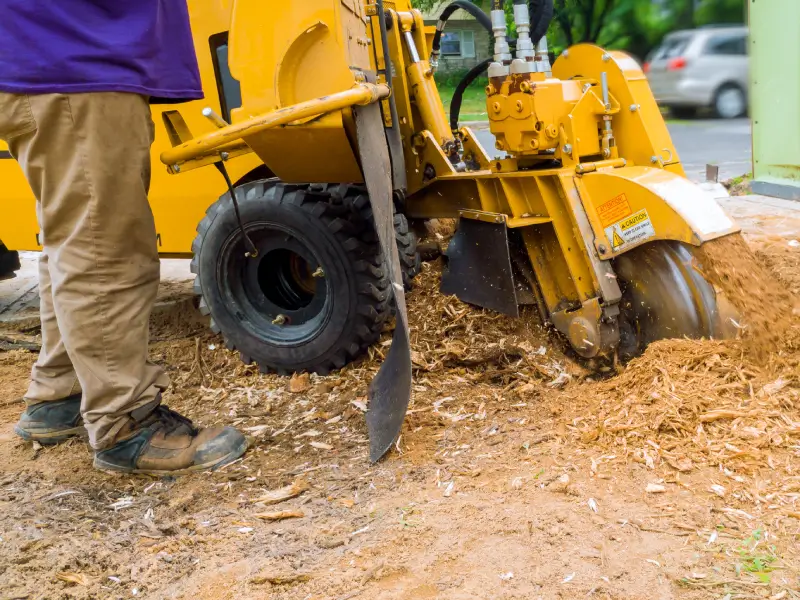
Grinding and full stump excavation across Fountain Inn and southern Greenville County. Grinding shaves the stump below grade with minimal disturbance, which is the right call on an established lot. Full excavation pulls the root ball and is necessary when something is being built on that exact spot — on a development pad out toward the county line, grinding alone will leave you with settlement problems later. We backfill and rough grade the holes as we go.
Services include:
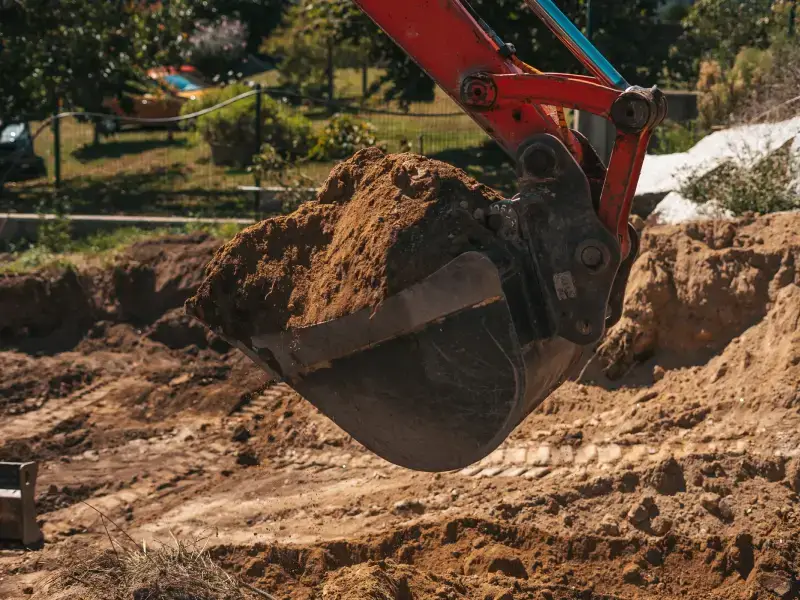
Site and foundation excavation, trenching for water, sewer and electrical, driveway cuts, culverts, ponds and drainage. Piedmont clay here percolates at roughly 0.1 to 0.5 inches per hour, so drainage gets designed in rather than patched on afterwards. With the city building out infrastructure to keep pace with growth, utility trenching is steady work. On anything approaching the county thresholds we confirm the permitting position before a bucket touches dirt.
Services include:
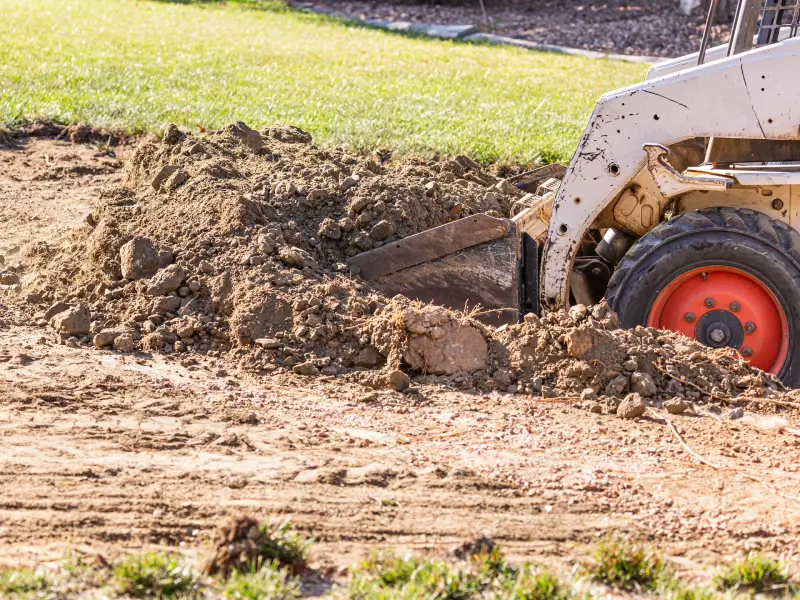
Rough grading, building pads, driveway and shed bases, slab prep, lot leveling and drainage swales. On the Greenville County side the critical design storm is the 25-year, 24-hour event, settled at the pre-design meeting — and just north of here the Gilder Creek watershed carries a 50-year storm and Mauldin a 100-year. On the Laurens side the process is different again. We establish which applies before we grade, because grading to the wrong standard is how a plan comes back.
Services include:
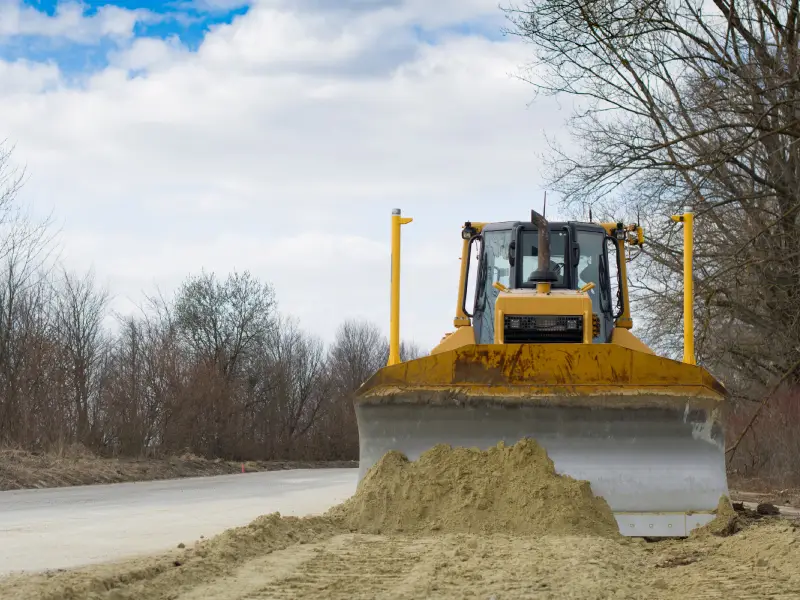
New right-of-way cutting for utilities and sewer, easement clearing, access roads back to rear acreage, and maintenance re-clearing on corridors that have grown up. With Fountain Inn adding infrastructure and industrial park capacity, new utility runs are being cut here. We’ve cut and maintained sewer rights-of-way for years, and bush hogging on a maintenance cycle keeps a cleared corridor from reverting to woods.
Services include:
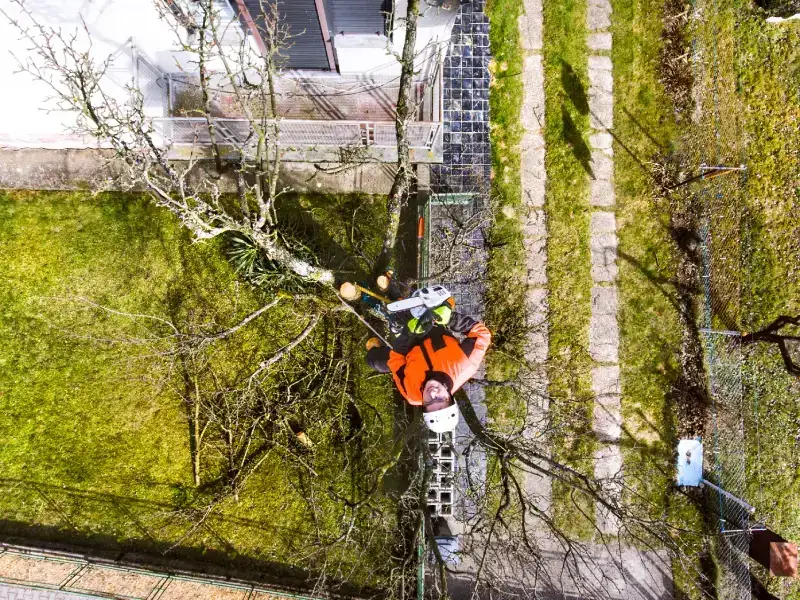
Large and hazardous tree removal, storm cleanup and removals bundled into clearing work. Two high-capacity chippers and twenty-five years of taking trees off job sites. Inside Greenville County, removals are not simply a matter of deciding a tree should go — the tree preservation ordinance applies wherever a stormwater permit is required, so we check first. On the Laurens County side of the line the position differs, which is one more reason to know exactly where your property sits.
Services include:
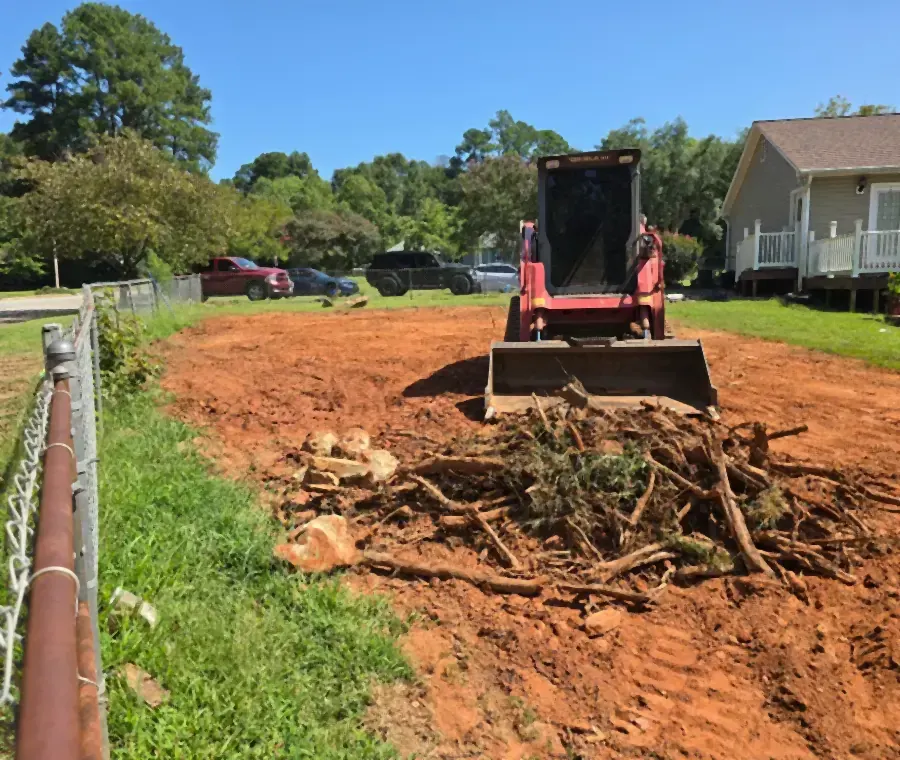
Fountain Inn sits on the same Cecil, Madison and Pacolet profile as the rest of the Upstate — brown topsoil for a foot, red clay by twelve inches, brick-red and dense by two feet, then ten to twenty-five feet of saprolite. Clay this tight percolates at roughly 0.1 to 0.5 inches per hour, so standing water on a Fountain Inn lot is nearly always a grading problem rather than a soil one. East of the city the ground falls toward the Enoree River, which SC-418 crosses on its way to Woodruff, and the bottomland there behaves nothing like the uplands.
We come into Fountain Inn off I-385, or across on SC-418 from the Woodruff side, or up SC-14 from Laurens. Downtown Greenville is twenty-five to thirty minutes north, which is the whole reason the Golden Strip exists in its current form. Inside the city it’s Main Street and the newer subdivisions like Mulberry Estates; outside it, the ground opens up quickly toward Gray Court, Owings and the Laurens County line, and access lanes back to rear acreage get long.
The job mix here is genuinely mixed, which is unusual for the Golden Strip. Inside the limits it’s established-lot work — undergrowth, stumps near structures, drainage correction, driveway grading. Outside them it’s real clearing and grubbing on acreage, because unlike Simpsonville and Mauldin further north, Fountain Inn still has open ground around it. The city has grown almost six percent this century, exceeded its master plan goals over the past five years and is drafting a new one, with new development driving demand for industrial parks and infrastructure. A new high school and a growing trail network connecting Mulberry Estates toward Bryson Elementary are part of the same build-out.
Here is the single most important thing about doing land work in Fountain Inn, and most contractors will not raise it: the Greenville–Laurens county line runs through this city, and the two counties do not regulate land disturbance the same way. On the Greenville County side you are under an NPDES MS4 permittee with its own Storm Water Management Ordinance requiring a grading permit, stormwater quality requirements starting at ten thousand square feet rather than one acre, a 25-year critical design storm, and a tree preservation ordinance running on tree density unit credits that requires specimen trees and trees within forty feet of the disturbance limits to be identified on the site plan by species — and which expressly prohibits using timber harvesting to prep a site for non-exempt development. On the Laurens County side the local process is different and we verify the current threshold rather than assuming. Statewide on both sides, SCDES requires NPDES coverage and a SWPPP at one disturbed acre, with a Comprehensive SWPPP by a licensed SC professional at two. We establish which county your parcel is in before we quote, not after.
01
The Greenville–Laurens line runs through Fountain Inn and the two counties regulate land disturbance differently. We establish which applies before quoting. Most contractors bidding your job will not even mention it.
02
Michael Manning, his son Marshall, and two operators — one over thirty years with Michael, one over ten. Whichever side of the county line your property is on, the owner walks it, quotes it, and is on the machine.
03
Fountain Inn still has open ground around it, unlike the rest of the Golden Strip. Dump trucks, excavators and two high-capacity chippers handle a twenty-acre tract and a half-acre lot with the same crew.
04
Ten thousand square feet, not one acre. Tree density unit credits. A 50-year design storm just north in Gilder Creek. That knowledge is what keeps a project moving instead of stopped.
05
Free estimates across Fountain Inn, and a straight recommendation about clearing versus mulching. Family-owned, trustworthy and honest — that’s the whole business.
Eastern Land Solutions provides land clearing, grubbing, forestry mulching and site prep throughout Fountain Inn, SC and the surrounding area on both sides of the Greenville–Laurens county line. Our coverage runs west to Easley, northeast to Gaffney and south to Laurens — we do not work in North Carolina.
Whichever side of the line your parcel actually sits on, and in Fountain Inn that genuinely varies street to street because the Greenville–Laurens line runs through the city. On the Greenville County side you’re under the county’s Storm Water Management Ordinance with a grading permit requirement, stormwater quality rules starting at ten thousand square feet rather than one acre, and a tree preservation ordinance. Laurens County administers a different local process. We establish which applies before we quote rather than finding out partway through the job.
On the Greenville County side, almost certainly — the county is an NPDES MS4 permittee requiring a grading permit, and its stormwater quality requirements begin at ten thousand square feet, roughly a quarter of an acre, rather than the one acre that applies statewide. That captures a lot of ordinary residential work. On the Laurens County side the local process differs and we verify the current threshold. Either way, SCDES requires NPDES coverage and a SWPPP at one disturbed acre statewide, with a Comprehensive SWPPP by a licensed SC professional at two acres.
Yes, and it’s one of the reasons this is a good market for us. Unlike Simpsonville and Mauldin further north, Fountain Inn still has genuine open ground around it — acreage toward Gray Court, Owings, the Laurens County line and east toward the Enoree. We clear, grub, stump and rough grade, cut access lanes back to rear acreage, and mulch the ground you want opened up rather than stripped. Long lanes change the equipment-move time, so we measure rather than guess.
Land clearing takes the material off the site — trees down, stumps out, debris hauled away, ground left open. Forestry mulching grinds standing brush and small trees in place and leaves the chips as a mat. If you’re building, you need clearing and grubbing. If you’re opening up woods, cutting trails or reclaiming ground, mulching is usually cheaper and faster — and on the Greenville County side it disturbs far less ground, which helps keep a job clear of the county’s quarter-acre stormwater quality threshold.
That’s routine work. We clear, grub and stump the building envelope, cut the driveway in, rough grade the pad and set up drainage so the builder can get equipment onto the site. Around Fountain Inn the pad usually needs cutting and benching rather than scraping, because the ground slopes. And we confirm which county’s requirements apply first — on a homesite near the line that is not a formality.
It depends on what’s standing, how steep the ground is, and — on the Greenville County side — what the tree preservation ordinance requires you to leave in place. A tract you can clear outright prices very differently from one where specimen trees have to be protected and worked around. Access matters too, since long lanes back to rear acreage slow every equipment move. We walk the property, work out where you actually stand and give you a firm number for free.
Whether it’s fifteen acres out toward the Laurens County line or an overgrown lot near Mulberry Estates, we’ll walk it with you, work out which county’s requirements apply, and give you a free estimate. Family-owned, based in Roebuck, covering both sides of the line.