
Family-owned land clearing, forestry mulching, stump removal and site prep across Greenville County — from the Reedy River and Woodruff Road out to Travelers Rest and Fountain Inn.
25 Years Operating Heavy Machinery
Family-Owned & Family-Operated
Free Estimates — Always
Greenville is the county seat of the largest county in South Carolina, and the numbers behind that are genuinely unusual. Greenville County grew 18.7 percent between 2015 and 2025 and added roughly 9,300 residents between 2024 and 2025 alone — the 35th-largest county gain anywhere in the United States — almost entirely from people moving in from other states. The city itself passed 80,000 residents for the first time in July 2026. The Reedy River runs through the middle of it all, and Falls Park sits on 32 acres of what used to be textile mill land before the Carolina Foothills Garden Club reclaimed it in 1967.
For land work, Greenville County is its own regulatory environment and that is the single most important thing to understand about working here. The county is an MS4 permittee with its own Storm Water Management Ordinance, and its stormwater quality requirements kick in at ten thousand square feet — about a quarter acre — rather than the one acre that applies across most of South Carolina. There’s a tree preservation ordinance running on tree density unit credits that requires specimen trees and trees within forty feet of the disturbance limits to be identified on the site plan by species, and it explicitly forbids using timber harvesting to prepare a site as a way around the rules. A contractor who doesn’t know that will get your project stopped.
We’re a four-person family crew working out of Roebuck, and we’re honest about what that means in a market this size: we are not the biggest outfit bidding Greenville County work. What we offer is that Michael walks your property himself, quotes it himself, and is on the machine. For residential lots, homesites, acreage and small commercial parcels, that’s usually what people actually want.
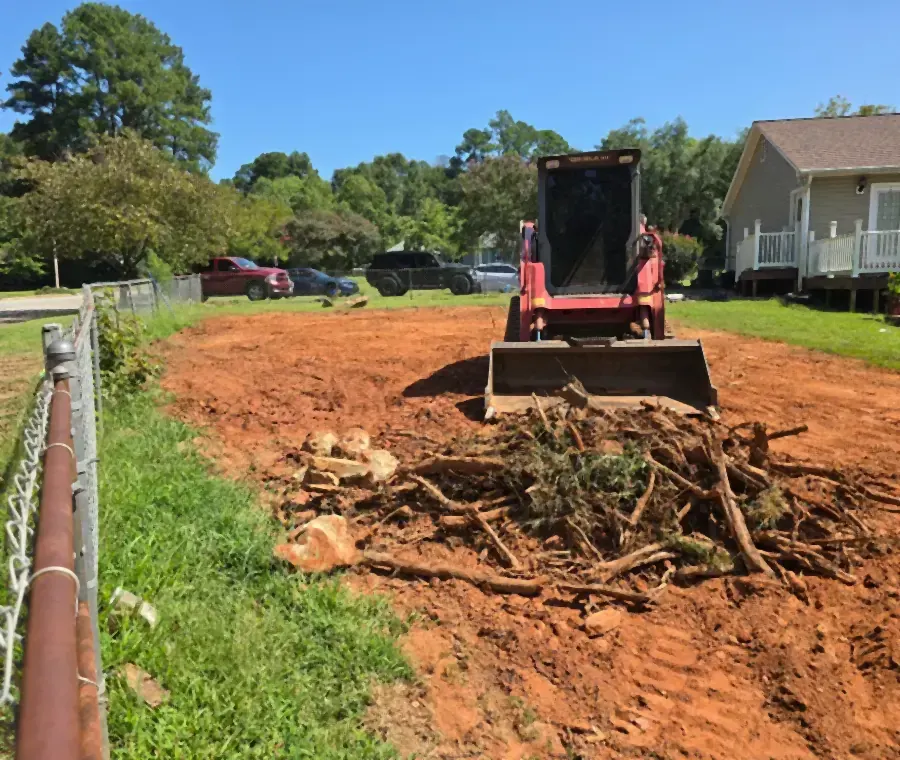
Every service Eastern Land Solutions offers is available across Greenville and Greenville County. We focus on residential, farm and small commercial work — large commercial contracts are outside what we take on right now, and we’ll tell you that straight.
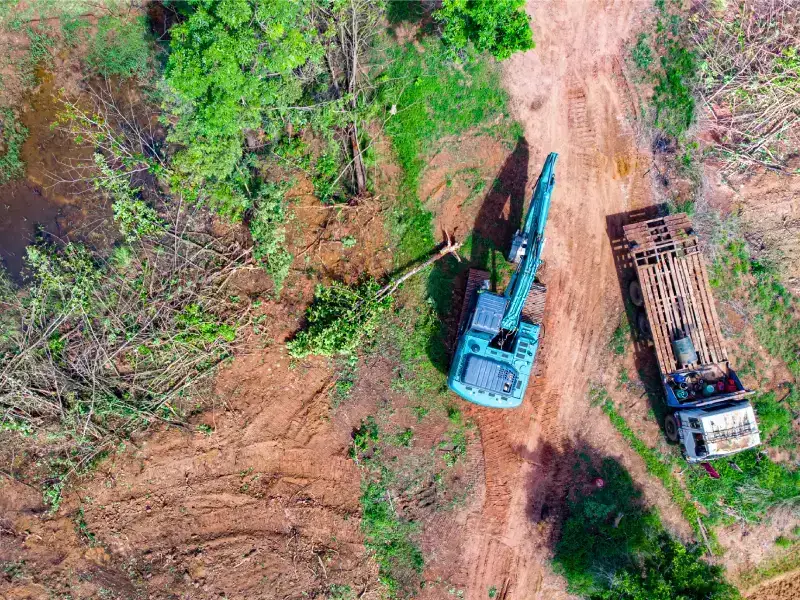
We clear residential lots, homesites and acreage across Greenville County, from infill parcels inside the city to wooded tracts out toward Travelers Rest and Fountain Inn. The thing that trips people up here is the county’s tree preservation ordinance — specimen trees and trees within forty feet of your disturbance limits have to be identified on the site plan by species, and you cannot use a timber harvest to get around it. We plan the clear around what has to stay. Debris goes out on our own dump trucks.
Services include:
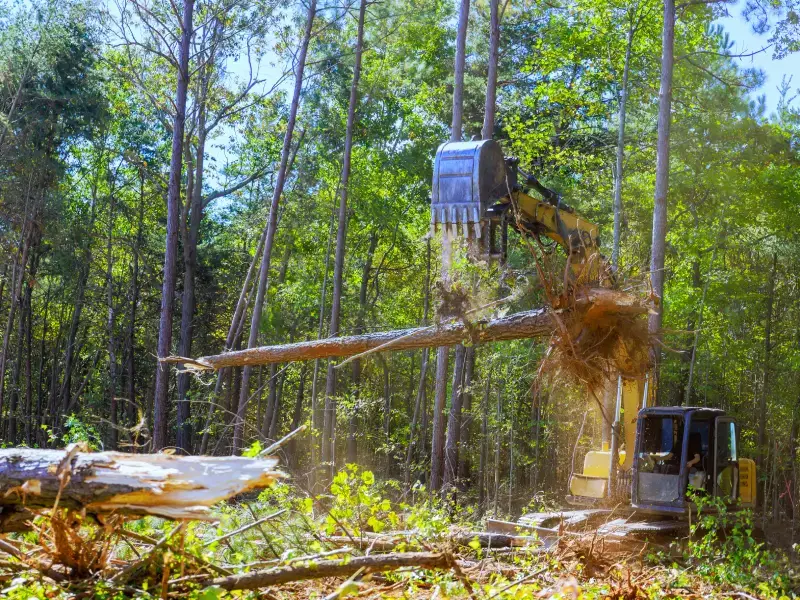
Mulching is often the strongest option in Greenville County specifically because of how the rules are written. Grinding material in place disturbs far less ground than full clearing, leaves a mat that holds red clay through a hard rain, and keeps you well clear of thresholds that a stripped site would trip. We use it for underbrush, property lines, trails and selective clearing where mature trees are staying — which, given the tree density unit credits, is frequently what you want anyway.
Services include:
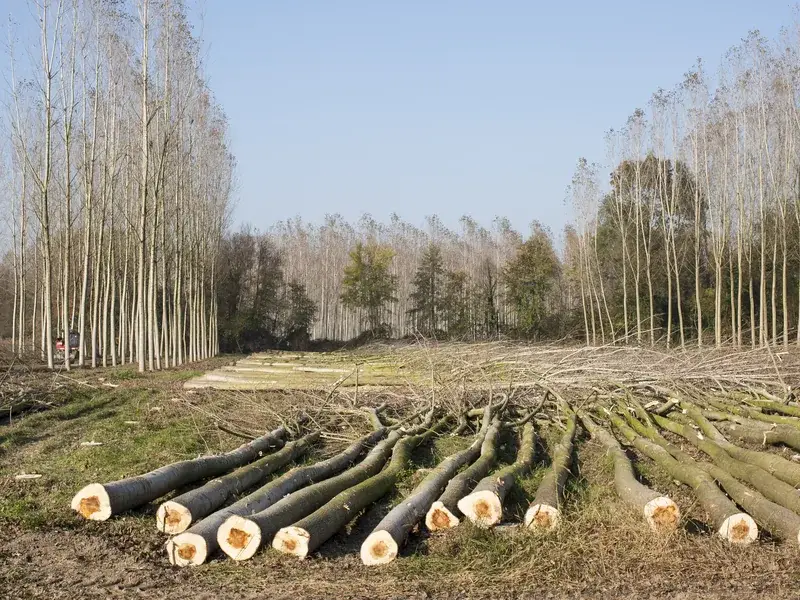
Grinding and full stump excavation across Greenville and the surrounding county. Grinding shaves the stump below grade with minimal ground disturbance, which matters more here than almost anywhere given the quarter-acre stormwater quality threshold. Full excavation pulls the root ball and is what you need when something is going in on that spot. Older Greenville neighborhoods carry big mature hardwoods whose roots run further toward foundations and driveways than people expect.
Services include:
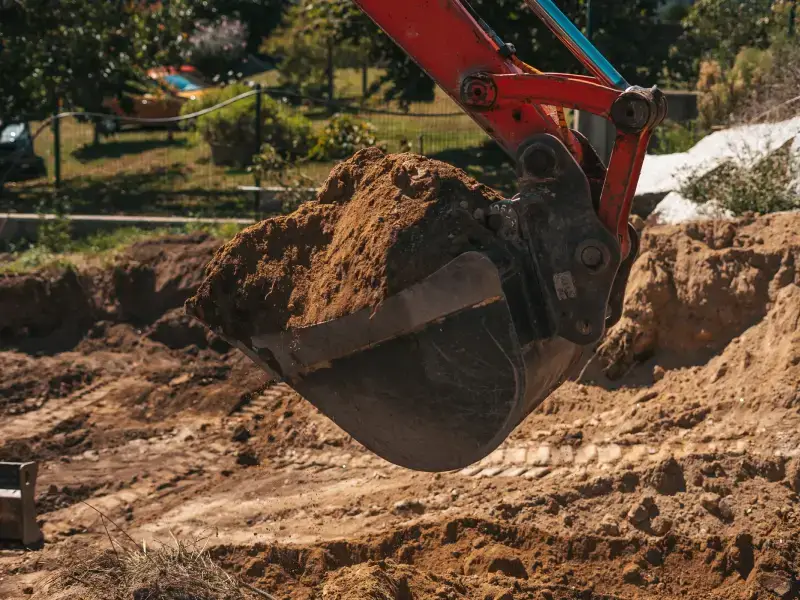
Footing and foundation excavation, trenching for water, sewer and electrical, driveway cuts, culverts and drainage across Greenville County. Piedmont clay here percolates at roughly 0.1 to 0.5 inches per hour, so standing water on a Greenville lot is almost always a grading problem rather than a soil problem. We locate before we dig. On anything approaching the county’s thresholds we confirm the permitting position before a bucket touches dirt rather than afterwards.
Services include:
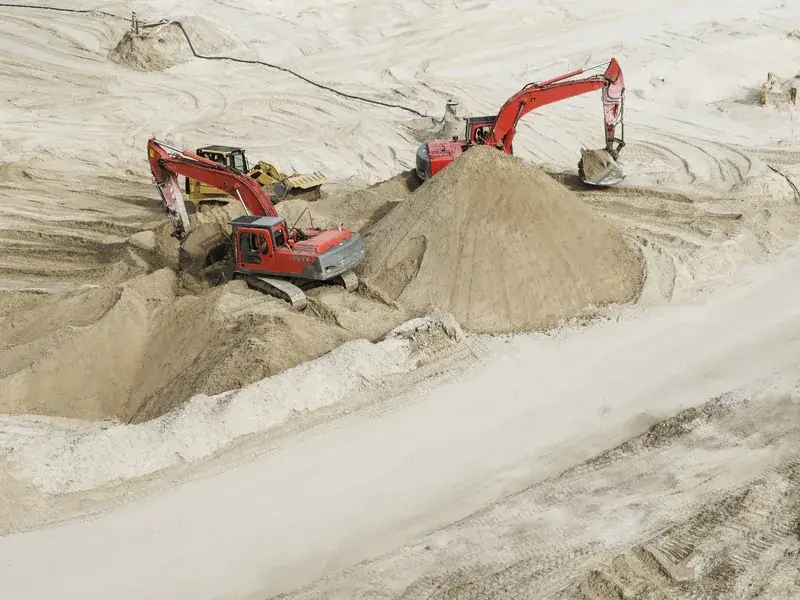
Rough grading, building pads, driveway and shed bases, slab prep, lot leveling and drainage swales. Greenville County’s design storm is the 25-year, 24-hour event for most of the county — but the 50-year event in the Gilder Creek watershed and the 100-year event inside the City of Mauldin, which is settled at the pre-design meeting. That changes how a site is graded, and it’s the kind of detail that separates a plan that gets approved from one that comes back.
Services include:
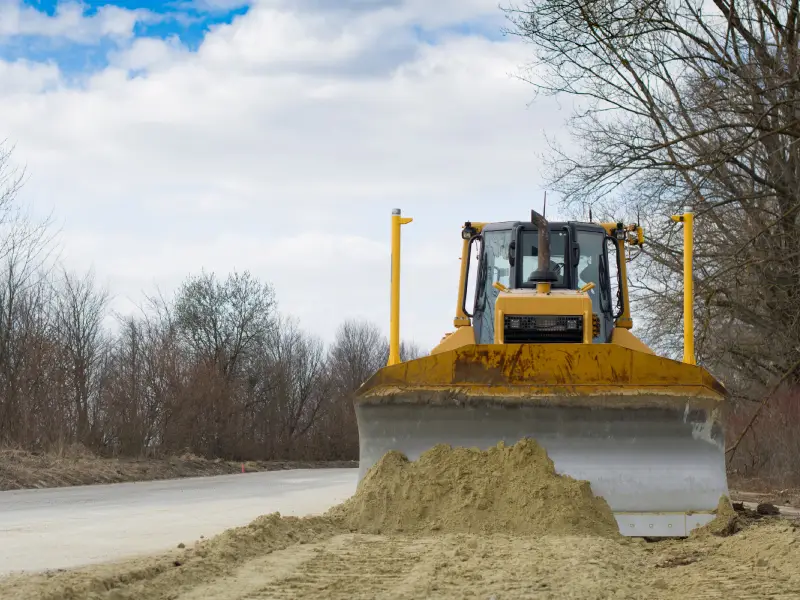
Utility and sewer right-of-way clearing, easement cutting, access lanes and maintenance re-clearing across the county. Corridors grow back fast on Piedmont ground, and re-clearing an easement that has gone to woods is different work from cutting a new one. We’ve cut and maintained sewer rights-of-way for years. Bush hogging and brush cutting on a maintenance cycle keeps a corridor passable rather than letting it revert.
Services include:
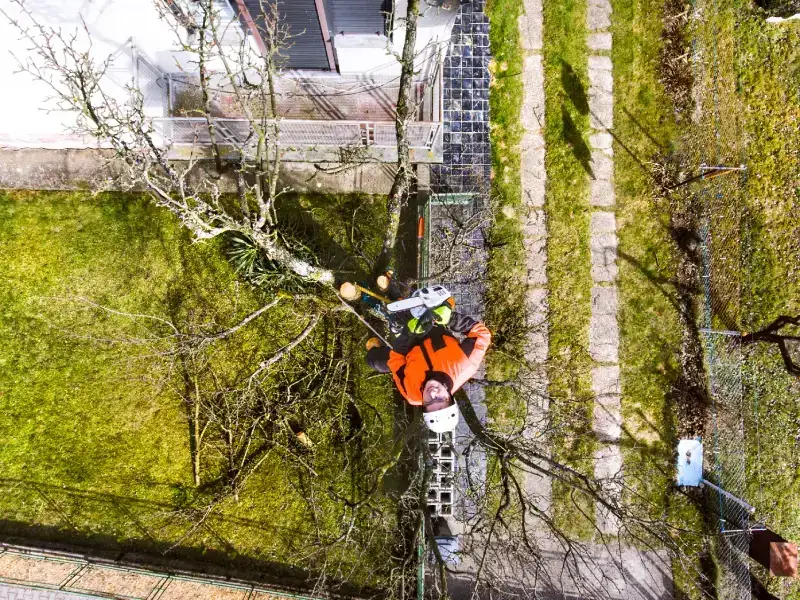
Large and hazardous tree removal, storm cleanup and removals bundled into clearing work. Two high-capacity chippers and twenty-five years of taking trees off job sites. Mature trees in established Greenville neighborhoods sit close to houses and power lines, which makes removals a job for equipment and experience. Note that tree removal in Greenville County is not simply a matter of deciding a tree should go — the preservation ordinance applies wherever a stormwater permit is required, so we check first.
Services include:
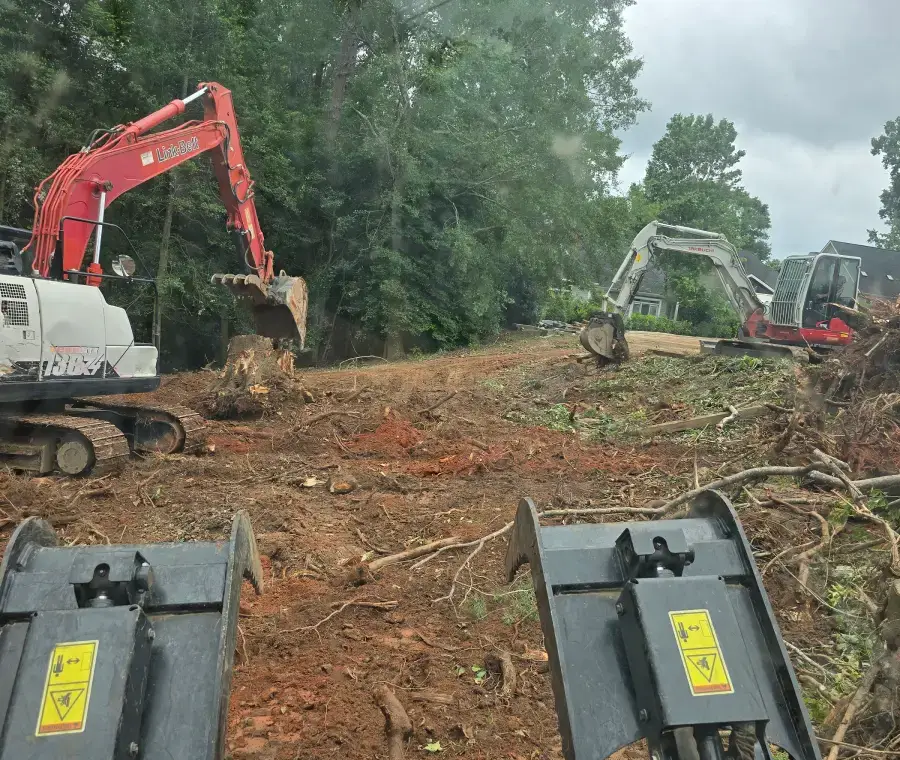
Greenville County sits on the same Cecil, Madison and Pacolet profile as the rest of the Upstate — brown topsoil for a foot, red clay by twelve inches, brick-red and dense by two feet, then saprolite — rising north toward Paris Mountain and the Blue Ridge. Clay this tight percolates at roughly 0.1 to 0.5 inches per hour. The Reedy River runs through the middle of the city and the Saluda forms the western county line, and the low ground along both behaves nothing like the uplands. The Gilder Creek watershed southeast of the city is treated differently from the rest of the county for design purposes, which we’ll come back to.
We come into Greenville County off I-85 and I-385, and work the corridors: Woodruff Road, Wade Hampton Boulevard, Laurens Road, White Horse Road, Pleasantburg Drive and SC-14 down through Simpsonville and Fountain Inn. On the west side it’s Parker, Berea, Welcome and Gantt; on the north it’s Travelers Rest and the Swamp Rabbit Trail corridor. In a county adding nine thousand people a year, traffic is a scheduling input rather than an inconvenience, and we plan equipment moves around it.
Our work in Greenville County is residential, farm and small commercial: lot clearing, homesite prep, driveway cuts, stump removal on established properties, drainage correction and acreage clearing out toward the county edges. We’re a four-person family crew, not a large commercial contractor, and we’re straight about that. For a homeowner, a builder doing a handful of houses, or a landowner opening up acreage, that’s usually an advantage — Michael walks the property, quotes it and runs the machine.
Greenville County is the strictest regulatory environment in our entire service area, and knowing that is most of the value we bring here. The county is an NPDES MS4 permittee with its own Storm Water Management Ordinance under Article III, Chapter 8 of the County Code, and it requires a grading permit for land disturbing activity. Critically, stormwater quality requirements begin at ten thousand square feet — roughly a quarter acre — not the one acre that applies across most of South Carolina, so jobs that would need nothing in Spartanburg County need compliance here. The critical design storm is the 25-year, 24-hour event for most of the county, the 50-year in the Gilder Creek watershed and the 100-year inside the City of Mauldin. The tree preservation ordinance runs on tree density unit credits, requires specimen trees and trees within forty feet of the disturbance limits to be shown on stormwater site plans with species information, and expressly prohibits clearing trees through timber harvesting as a way to prepare a site for non-exempt development — genuine forest land qualified by the SC Forestry Commission as true tree farming is exempt. Inside the city limits, the City of Greenville issues its own Land Disturbance Permit with inspections against the approved Sediment and Erosion Control Plan. We work to that rather than around it.
01
Ten thousand square feet, not one acre. Tree density unit credits. A 50-year design storm in Gilder Creek and 100-year in Mauldin. Most contractors bidding your job cannot tell you any of that, and it is exactly what gets projects stopped.
02
Michael Manning, his son Marshall, and two operators — one over thirty years with Michael, one over ten. The owner walks your property, quotes it, and is on the machine. In a market this size that’s increasingly rare.
03
We’re a four-person crew. We take residential, farm and small commercial work, and we’re straight when a job is better suited to a larger outfit. We’d rather send you elsewhere than overcommit and let you down.
04
Twenty-five years of operating heavy machinery and taking trees off job sites across the Upstate, including a golf course renovation that removed more than 500 trees. Experience shows up in what doesn’t go wrong.
05
Free estimates throughout Greenville County, and a real recommendation about whether you need clearing or mulching — which, given how this county’s ordinances are written, is a question worth asking before you commit.
Eastern Land Solutions provides land clearing, forestry mulching, excavation and site prep throughout Greenville, SC and the surrounding county. Greenville sits at the center of our coverage — our service area runs west to Easley, northeast to Gaffney and south to Laurens. We do not work in North Carolina.
Almost certainly, and Greenville County’s threshold is much lower than most of South Carolina. The county is an NPDES MS4 permittee with its own Storm Water Management Ordinance and requires a grading permit for land disturbing activity. Stormwater quality requirements begin at ten thousand square feet — roughly a quarter of an acre — not the one acre that applies statewide, so plenty of ordinary residential jobs that would need nothing in a neighboring county need compliance here. Inside the city limits, the City of Greenville issues its own Land Disturbance Permit with its own inspections. We confirm your position before any work starts.
Not always, and this catches people out. Greenville County’s tree preservation ordinance applies wherever a stormwater permit is required. It runs on tree density unit credits, and specimen trees plus any trees within forty feet of your limits of disturbance have to be identified on the stormwater site plan with species information. The ordinance also expressly prohibits clearing trees through timber harvesting as a way to prepare a site for non-exempt development — that route is closed. Genuine forest land qualified by the SC Forestry Commission as true tree farming is exempt. We check before we cut.
It depends on what’s standing, how steep the ground is, and — in this county more than most — what the ordinances require you to leave in place. A tract you can clear outright prices very differently from one where specimen trees have to be protected and worked around. Access matters, and so does whether the job crosses the county’s ten-thousand-square-foot stormwater quality threshold. We walk the property, work out where you actually stand and give you a firm number for free.
Yes — both grinding and full stump excavation, and it’s the single highest-volume service search in this market. Grinding shaves the stump below grade with minimal ground disturbance, which is often the right call in Greenville County precisely because it keeps disturbance low. Excavation pulls the whole root ball and is necessary when something is being built on that exact spot. Older Greenville neighborhoods have large mature hardwoods whose roots reach further toward foundations and driveways than most people expect.
No, and we’d rather say so up front. Eastern Land Solutions is a four-person family crew — Michael, his son Marshall and two long-time operators. We take residential, farm and small commercial work across Greenville County, and we do it properly. Very large commercial contracts are outside what we take on right now. If your project is bigger than we should handle, we’ll tell you rather than stretch and let you down halfway through.
Because it determines what your drainage actually has to handle, and Greenville County doesn’t use one number everywhere. The critical storm is the 25-year, 24-hour event for most of the county, but the 50-year event in the Gilder Creek watershed and the 100-year event inside the City of Mauldin — and which one applies is settled at the pre-design meeting for your specific site. Grading to the wrong standard is how a plan comes back for revision. On top of that, Piedmont clay here percolates at only 0.1 to 0.5 inches per hour, so there’s little margin for getting the drainage wrong.
Whether it’s a lot off Woodruff Road, a homesite out toward Travelers Rest or acreage near Fountain Inn, we’ll walk it with you, tell you where you stand with the county’s requirements, and give you a free estimate. Family-owned, based in Roebuck, covering Greenville County properly.