
Lot clearing, forestry mulching, stump removal and grading across Simpsonville and the Golden Strip — from Woodruff Road and Harrison Bridge down to Fairview and the I-385 corridor.
25 Years Operating Heavy Machinery
Family-Owned & Family-Operated
Free Estimates — Always
Simpsonville is the middle link of the Golden Strip, the I-385 corridor running south out of Greenville through Mauldin, Simpsonville and Fountain Inn. It was a quiet agricultural town until 1953, when Greenville Water Works extended its system through all three — a local reporter coined the Golden Strip name, industry followed in the 1960s, and the city grew 254 percent between 1970 and 1990. It is now the 23rd-most populous city in South Carolina, somewhere around 27,500 residents, with a downtown that still runs along the railroad tracks.
That history matters for land work because it means Simpsonville is a mature, built-out suburb rather than open ground. The jobs here are infill lots, taking back properties that have grown up, removing stumps and mature trees close to houses and driveways, correcting drainage on lots graded decades ago, and driveway work — with genuine acreage only at the edges, out toward Fountain Inn, Piedmont and Pelzer. It’s close-quarters work with neighbors, traffic and limited staging room, which is exactly what our equipment is sized for.
The other thing that matters here is the rules. Greenville County’s stormwater quality requirements start at ten thousand square feet — roughly a quarter of an acre — not the one acre that applies across most of South Carolina, and the county’s tree preservation ordinance applies wherever a stormwater permit is required. On top of that, the Gilder Creek watershed in this area carries a 50-year critical design storm rather than the 25-year used elsewhere in the county. We work to those numbers rather than around them.
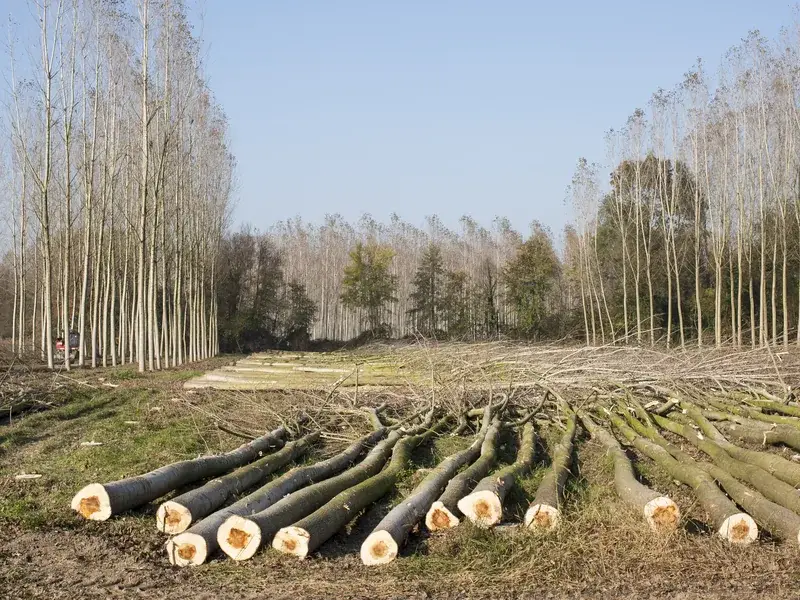
Everything Eastern Land Solutions offers is available across Simpsonville and the Golden Strip. Most of it is residential-scale work on established properties, and all of it starts with a free walk-through.
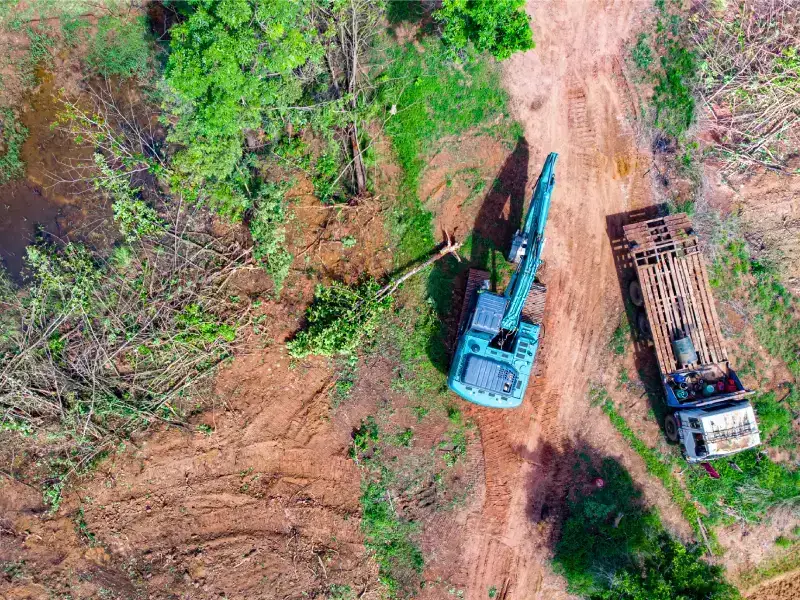
Clearing in Simpsonville is lot-scale rather than acreage-scale — infill parcels, properties that have grown up over the years, and small tracts out toward Fairview Road and the Fountain Inn side. There’s rarely room to burn on a lot this close to neighbors, so material goes out on our own trucks or gets mulched in place. The thing to know before you start is the county’s tree preservation ordinance: specimen trees and anything within forty feet of your disturbance limits has to be identified on the site plan by species.
Services include:
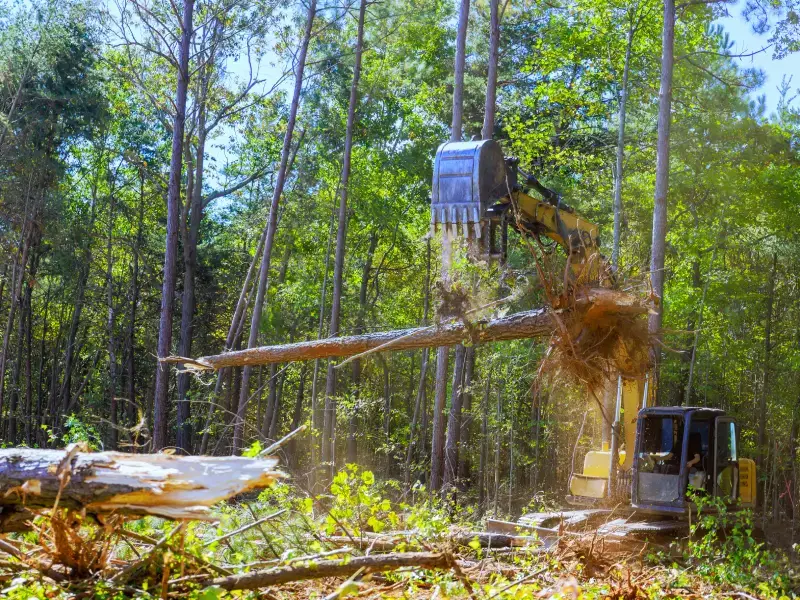
Mulching is frequently the strongest option in Simpsonville, and for a specific reason — grinding material in place disturbs far less ground than full clearing, which matters a great deal where Greenville County’s stormwater quality threshold starts at ten thousand square feet. It also leaves a mat that holds red clay through a hard rain and doesn’t require trucks running up and down a residential street all week. For undergrowth, fence lines and property boundaries it’s the obvious answer.
Services include:
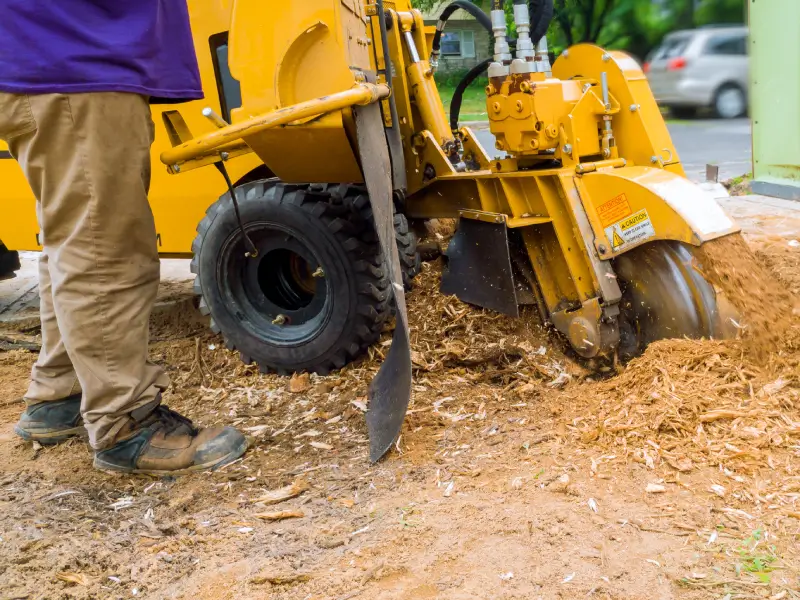
Grinding and full stump excavation across Simpsonville and the Golden Strip. Grinding shaves the stump below grade with minimal ground disturbance, which is usually the right call on an established lawn and keeps you well clear of county thresholds. Full excavation pulls the root ball and is only necessary when something is going in on that exact spot. Established Simpsonville neighborhoods carry mature hardwoods whose roots reach further toward foundations and driveways than most people expect.
Services include:
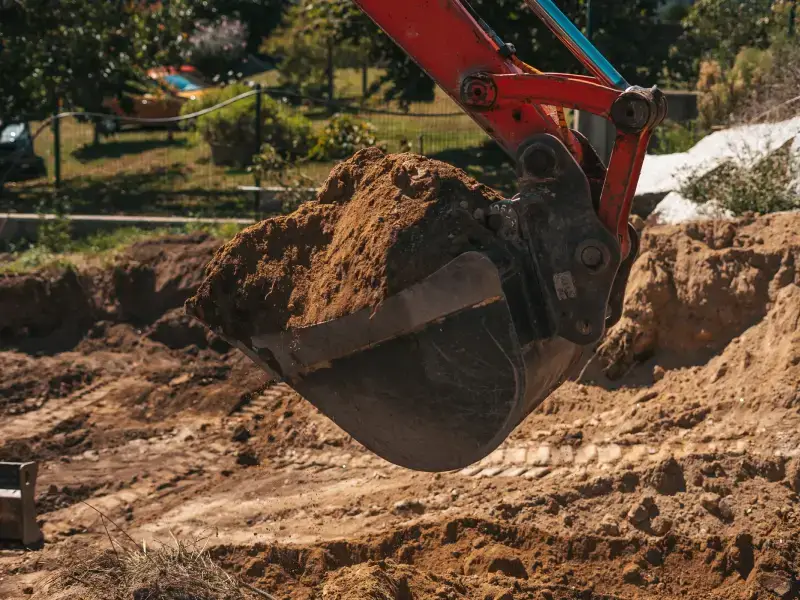
Footing and foundation excavation, trenching for water, sewer and electrical, driveway cuts, culverts and drainage across Simpsonville. Piedmont clay here percolates at roughly 0.1 to 0.5 inches per hour, so standing water on a Simpsonville lot is nearly always a grading problem rather than a soil problem. We locate before we dig, and on anything approaching the county’s thresholds we confirm the permitting position before a bucket touches dirt rather than afterwards.
Services include:
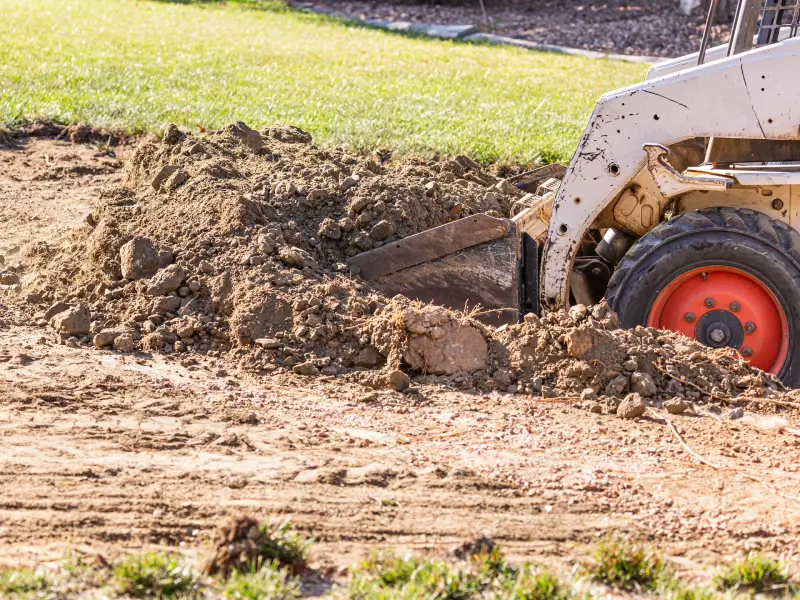
Rough grading, building pads, driveway and shed bases, slab prep, lot leveling and drainage swales. This is where local knowledge pays here: Greenville County’s critical design storm is the 25-year, 24-hour event across most of the county — but the 50-year event in the Gilder Creek watershed, which takes in this area, and the 100-year event inside neighboring Mauldin. Which one applies is settled at the pre-design meeting, and grading to the wrong standard is how a plan comes back for revision.
Services include:
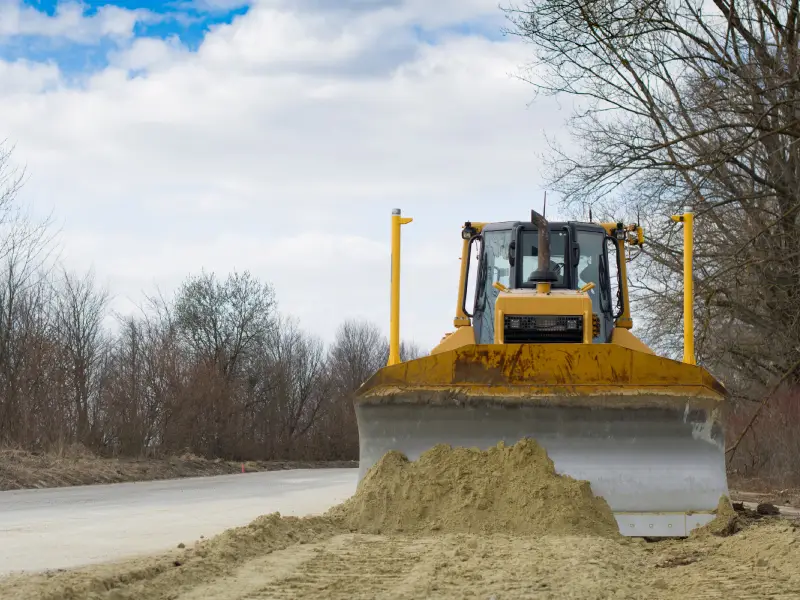
Utility and sewer right-of-way clearing, easement cutting and maintenance re-clearing across southern Greenville County. Corridors grow back fast on Piedmont ground, and re-clearing an easement that has gone to woods is a different job from cutting a new one. We’ve cut and maintained sewer rights-of-way for years. Bush hogging on a maintenance cycle keeps a corridor passable rather than letting it revert.
Services include:
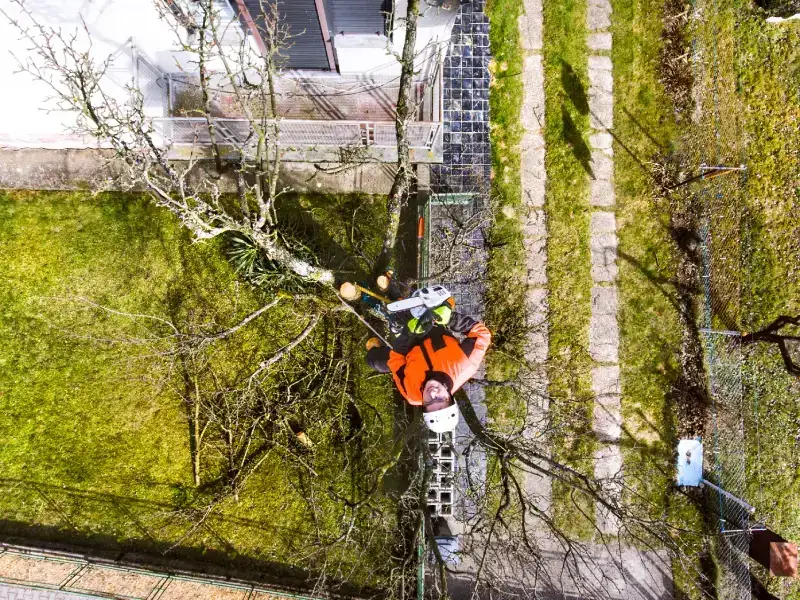
Large and hazardous tree removal, storm cleanup and removals bundled into clearing work. Mature trees in established Simpsonville neighborhoods sit close to houses and power lines, which makes removals a job for equipment and experience. Two high-capacity chippers means debris leaves with us instead of sitting at the curb. Note that removals here are not purely your call — the county’s tree preservation ordinance applies wherever a stormwater permit is required, so we check first.
Services include:
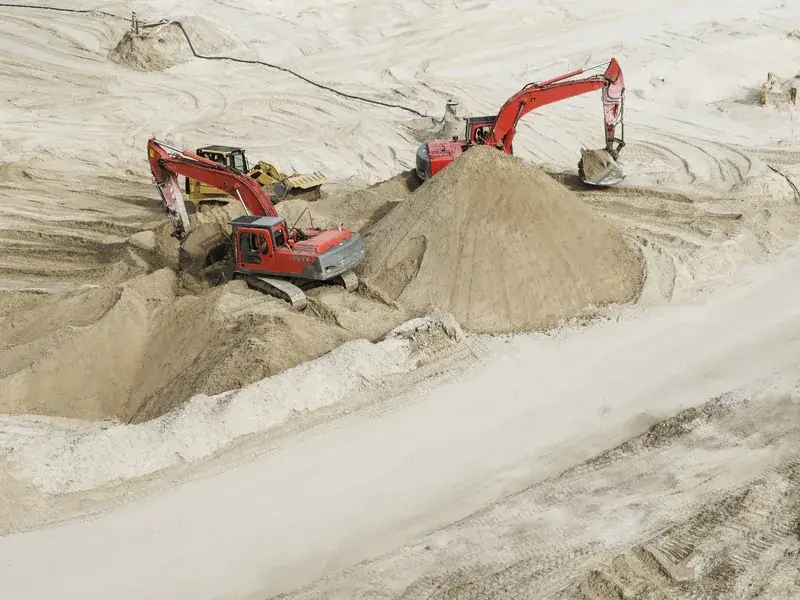
Simpsonville sits on the same Cecil, Madison and Pacolet profile as the rest of the Upstate — brown topsoil for a foot, red clay by twelve inches, brick-red and dense by two feet, then saprolite. Clay this tight percolates at roughly 0.1 to 0.5 inches per hour, which is why standing water in the low corner of a Simpsonville yard is almost always about where the ground was graded rather than about the soil itself. The Gilder Creek watershed takes in this part of southern Greenville County, and that has a direct practical consequence we come back to below.
We come into Simpsonville off I-385 and work the corridors: Woodruff Road to the north, US-276, SC-14 running down through Fountain Inn, Harrison Bridge Road, Fairview Road and Main Street through the old downtown along the railroad. This is the Golden Strip, one of the fastest-growing corridors in the country, and traffic is a scheduling input rather than an inconvenience — we plan equipment moves around it rather than getting caught in it.
The work here reflects a mature suburb. Simpsonville grew 254 percent between 1970 and 1990 and was briefly the fastest-growing city in the state in the early nineties; what that leaves behind, thirty years on, is thousands of established properties with mature trees, drainage set to another era’s standards, and driveways due for attention. So the job mix is infill lot clearing, undergrowth removal, stump work near structures, drainage correction and driveway grading — with real acreage only at the edges toward Fountain Inn, Piedmont and Pelzer.
Greenville County is the strictest regulatory environment we work in, and on this side of the county there’s an extra layer. The county is an NPDES MS4 permittee with its own Storm Water Management Ordinance under Article III, Chapter 8 of the County Code, and it requires a grading permit for land disturbing activity. Stormwater quality requirements begin at ten thousand square feet — roughly a quarter acre — not the one acre that applies statewide, which captures a large share of ordinary residential work in a city like this. The tree preservation ordinance runs on tree density unit credits, requires specimen trees and trees within forty feet of the disturbance limits to be shown on stormwater site plans with species information, and expressly prohibits using timber harvesting to prepare a site for non-exempt development. And the critical design storm here is the 50-year event in the Gilder Creek watershed rather than the 25-year used across most of the county — with the 100-year applying just north in Mauldin. Grading to the wrong storm is how a plan gets sent back.
01
Ten thousand square feet, not one acre. Tree density unit credits. A 50-year design storm in Gilder Creek. Most contractors quoting your job cannot tell you any of that, and it is exactly what gets projects stopped.
02
Michael Manning, his son Marshall, and two operators — one over thirty years with Michael, one over ten. The owner walks your property, quotes it, and is on the machine.
03
Simpsonville is a built-out suburb with neighbors, traffic and limited staging room. We mulch on site or haul out on our own trucks, and we keep the street clean.
04
Established Simpsonville neighborhoods carry hardwoods whose roots run further toward foundations and driveways than people expect. We grind rather than excavate where grinding will do the job.
05
Free estimates across Simpsonville and the Golden Strip, with a real recommendation about clearing versus mulching — which, given how this county’s ordinances read, is worth asking before you commit.
Eastern Land Solutions provides land clearing, forestry mulching, stump removal and grading throughout Simpsonville, SC and the surrounding Golden Strip. Our coverage runs west to Easley, northeast to Gaffney and south to Laurens — we do not work in North Carolina.
Greenville County’s threshold is far lower than most of South Carolina, so probably yes. The county is an NPDES MS4 permittee with its own Storm Water Management Ordinance and requires a grading permit for land disturbing activity. Critically, stormwater quality requirements begin at ten thousand square feet — roughly a quarter of an acre — not the one acre that applies statewide. That captures a great deal of ordinary residential work in a city like Simpsonville that would need nothing in a neighboring county. We confirm where you stand before any work begins.
Because Greenville County doesn’t use one design storm everywhere, and this area is one of the exceptions. The critical storm is the 25-year, 24-hour event across most of the county — but the 50-year event in the Gilder Creek watershed, which takes in this part of southern Greenville County, and the 100-year event just north inside the City of Mauldin. Which one applies to your specific site is settled at the pre-design meeting. Grading to the wrong standard is a common reason a plan comes back for revision.
Not always without checking. Greenville County’s tree preservation ordinance applies wherever a stormwater permit is required. It runs on tree density unit credits, and specimen trees plus any trees within forty feet of your limits of disturbance have to be identified on the stormwater site plan with species information. The ordinance also expressly prohibits clearing trees through timber harvesting as a way of preparing a site for non-exempt development. Genuine forest land qualified by the SC Forestry Commission as true tree farming is exempt. We check before we cut.
It comes down to diameter, root spread and how close the stump sits to a structure, driveway or utility line. Established Simpsonville neighborhoods carry large mature hardwoods, and their roots run further than people expect. Grinding is cheaper than excavation and disturbs far less ground — which in Greenville County is an advantage in itself, because it keeps you well clear of the quarter-acre stormwater quality threshold. Full excavation is only necessary when something is being built on that spot.
That’s what forestry mulching is for. The machine grinds standing brush and small trees in place and leaves the chips as a mat — no hauling, no burning, no stump holes, and no trucks running back and forth across your grass. On a built-out Simpsonville lot with neighbors close by that matters, and the low ground disturbance also helps keep the job under Greenville County’s thresholds. If you want the lot opened up rather than stripped, mulching is usually the answer.
Small commercial, yes — lot clearing, demolition debris removal, trenching, driveway cuts and pad prep on smaller parcels. Larger commercial contracts are outside what we take on right now. Eastern Land Solutions is a four-person family crew, and we’d rather tell you a job is better suited to a bigger outfit than stretch and let you down halfway through. Residential, farm and small commercial is where we do our best work.
Whether it’s an overgrown lot off Fairview Road, a stump too close to the driveway, or a yard that has never drained properly, we’ll come look at it, tell you where you stand with the county’s requirements, and give you a free estimate. Family-owned, based in Roebuck, covering Simpsonville and the Golden Strip.