
Some acreage does not need to be pretty. It needs to be passable, controllable, and cheaper to keep that way than it was to reclaim. Eastern Land Solutions provides forestry mowing across Spartanburg, SC and the surrounding Upstate — large-scale cutting on timber tracts, rough fields, cut-over ground, wildlife openings, and acreage that has to be knocked down on a schedule rather than finished to a landscape standard. It is the volume end of mulching: more ground per day, less selectivity, and a per-acre cost that makes sense on tracts where finish work would not. Call (864) 999-3420 for a free look.
Forestry mowing runs a heavy rotary or drum cutter over standing vegetation, reducing brush, saplings, briar, and light stems to chopped material left on the ground. The distinction from finish mulching is scale and standard. Mulching processes material into a fine, even blanket and works selectively around what you are keeping; mowing knocks material down efficiently across larger acreage and accepts a coarser result. On the ground, that means the machine travels in production patterns rather than picking its way, oversized stems are avoided rather than individually addressed, and the finish is measured by whether the tract is passable and controlled rather than by how it photographs. The applications follow from that. Cut-over timber ground gets mowed to knock down the slash and competing regrowth so replanting or natural regeneration can get established. Fields and old pasture get mowed to hold back succession — the point at which briar and pine whips would otherwise turn a field into woods. Wildlife openings and food plot edges get mowed to maintain early successional habitat, which is exactly the growth stage most game species use. Firebreaks, tract boundaries, and interior access lanes get mowed so a tract can be walked, inspected, and worked. The material stays where it falls and breaks down, which returns organic matter to soil that is generally short of it and protects the surface against the runoff that Piedmont clay produces so readily.
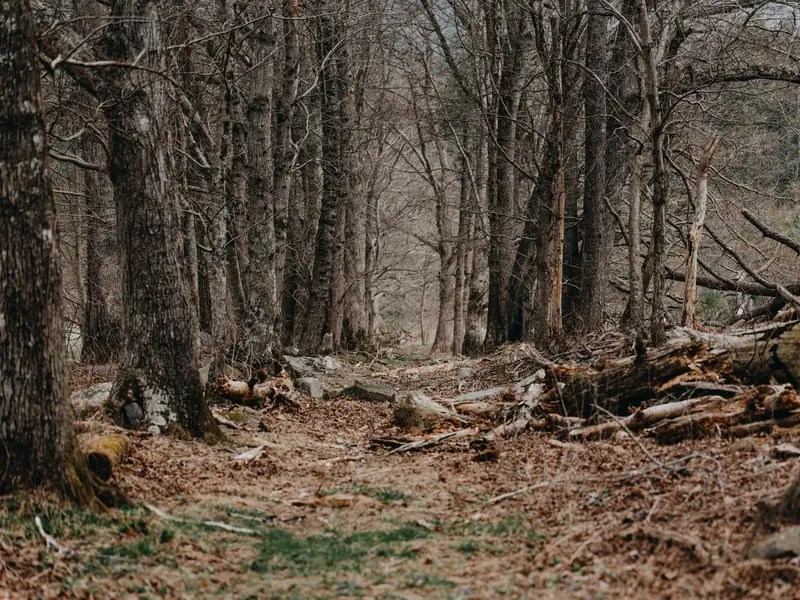
Acreage is only half of the quote. What matters as much is how the machine gets in, whether it can work in efficient patterns or has to pick around obstacles, how steep the ground is, and what the average stem size actually is. We walk or drive the tract, look at the worst section rather than the best one, and price from that.
We mark what is off limits: wet weather branches and drainages that should stay in cover, established trees you want kept, property lines, survey markers, old fence, wells, and anything metal that will destroy a cutter. On tracts that have been logged or farmed, buried wire and old equipment turn up regularly and are worth a conversation before we start.
The operator works in systematic passes rather than wandering, which is what makes the per-acre cost work. We work across slopes rather than up and down them where terrain allows, and we stay off saturated ground — running heavy equipment through wet Piedmont clay compacts the subsoil in a way that Clemson research shows persists long after the tracks are gone.
We walk the finished tract with you, note the sections that will close back in first, and give you an honest interval for the next pass. Mowing is maintenance, not a one-time fix, and tracts kept on a schedule cost a small fraction of tracts reclaimed after fifteen years of neglect.
For tracts that need heavier reclamation than mowing, see our land clearing services.
We mow tracts throughout Spartanburg County — Woodruff, Enoree, Cross Anchor, Pauline, Glenn Springs, White Stone, and Switzer, along the SC-56 and US-221 corridors — and north through Inman and Boiling Springs. We also cover Cherokee County around Gaffney and the Broad River side of the county, Laurens County to the south, and Greenville County out to Easley. Timber tracts between rotations, family land held for investment, hunting property, and old farm ground are the typical work. In this climate the case for scheduled mowing makes itself: long growing seasons and heavy summer rain mean a tract left alone crosses from field to thicket in about three years and from thicket to young timber in about eight. Our land and dirt work across the Upstate covers the heavier reclamation if a tract has already crossed that line.
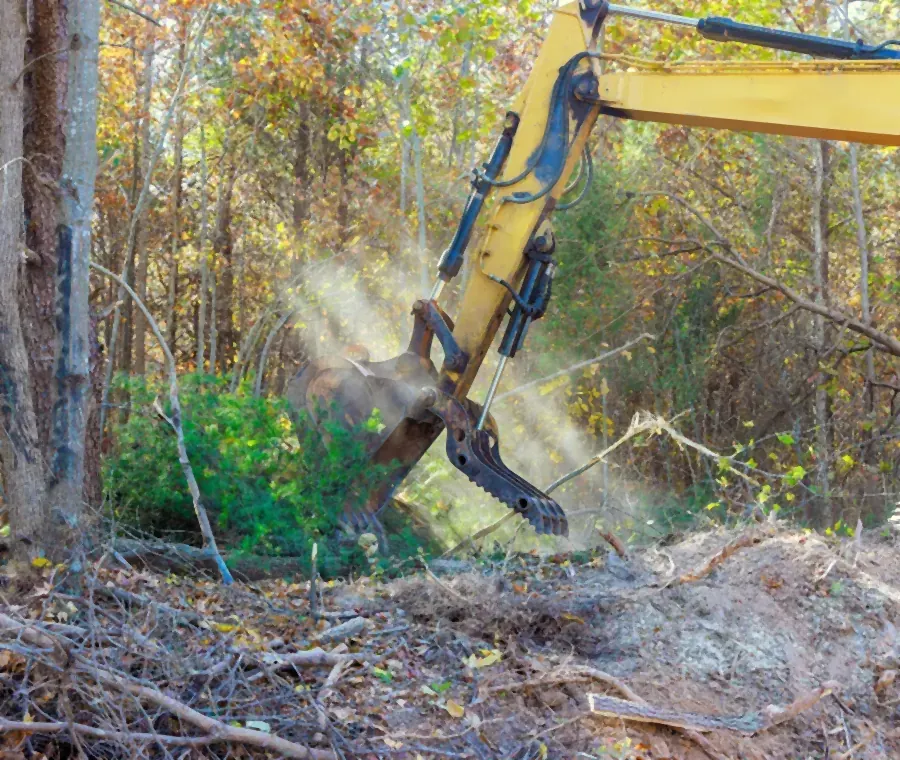
Volume work rewards machine judgment more than anything else — knowing what a cutter will take before you feed it, reading ground conditions, and working patterns that cover acreage without tearing the tract up. Michael brings twenty-five years running heavy equipment across this region, and Eastern Land Solutions is a four-person family crew with the same faces on every job. On a tract you are going to have us back to every few years, that consistency is worth something: we already know where the wet crossing is and where the old fence runs.
We also handle the whole progression rather than just one slice of it. A tract that needs mowing this year may need real clearing in one corner, a road opened, or a fence line reclaimed — see pasture and farm land clearing for that side. And if any of the material has to be burned rather than left, South Carolina requires notification to the Forestry Commission for forestry and land-clearing burns outside city limits, which we handle rather than leaving with you. Free estimates, credit cards accepted, Monday through Friday, 7:00 a.m. to 5:30 p.m. Give us the acreage and the access or call (864) 999-3420.
Usually per acre on open, workable tracts and by machine hour on rough or obstructed ground. The variables are stem size, density, slope, and access. Tracts that have been maintained before mow at a fraction of the cost of tracts being reclaimed for the first time.
Scale and finish. Mowing covers more acreage per day at a coarser standard; mulching produces a finer, more even layer and works selectively around what you are keeping. Mowing is right for tract-scale control and maintenance; mulching is right when the finished appearance matters or when you are working around trees you want to protect.
On open ground with light regrowth, several acres a day is realistic. On a tract with heavy stems, steep sections, or poor access, it can drop to under an acre. We give you an honest estimate of the days involved after seeing the ground, not before.
Every one to three years for most Upstate acreage. Sunny, open ground and creek bottoms close in fastest. Setting an interval and holding it is far cheaper over a decade than letting a tract go and paying for full reclamation, and it keeps the ground in the early successional stage most wildlife actually uses.
Yes — mowing between rows and around planted stock to control competing hardwood and briar is standard work, and it makes a real difference to how a young stand establishes. We need to know the row spacing and the age of the stand before we quote, because both change what the machine can do safely.